
Insights
Field notes on leadership in architecture and design: the decisions, narratives, and policy forces shaping practice today — written for principals, partners, and studio leaders who need more than conventional wisdom.

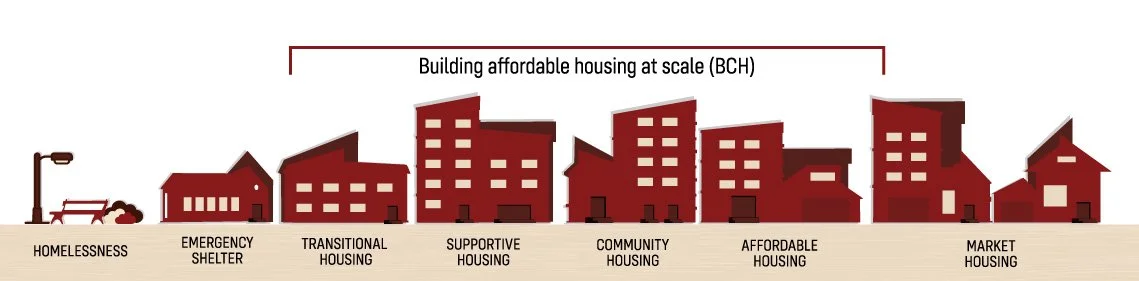
Definancialization of the Housing Market?
Canada’s housing crisis is being treated as a finance problem: recruit Bay Street, de-risk development, and turn public ambition into investment-ready transactions. We need more architects.
Attributed to my perpetual altruism, I remain dismayed by the architecture profession’s failure to mount a convincing case against the ongoing financialization of housing. This may be due, in part, to the fact that our very survival depends upon the financialization of housing. I still believe that architects can successfully run a practice that builds housing in both a socially progressive and economically productive way.
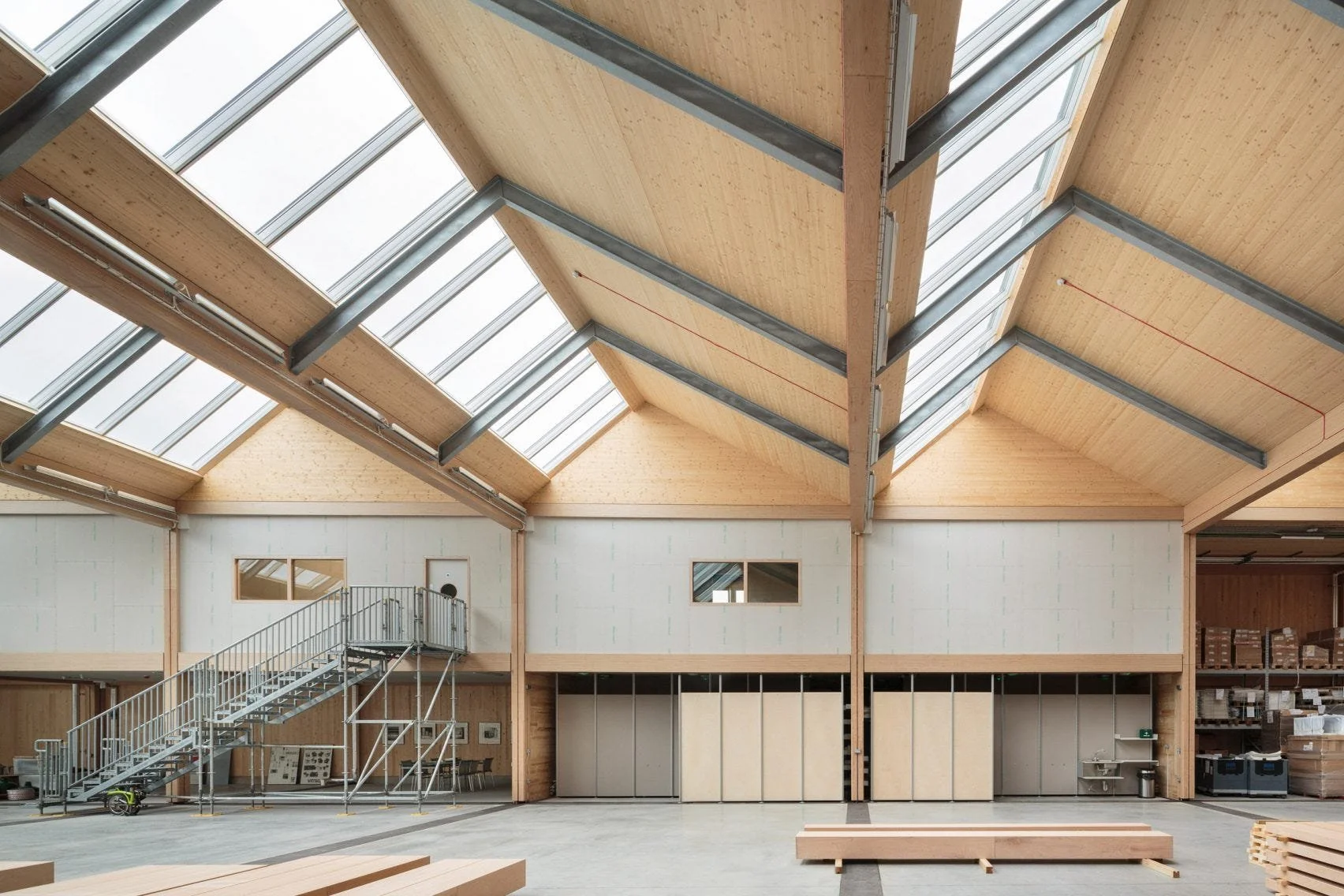
How would Gehry do it? What we forget when we talk about “Tall Timber”
It took me a long time to read through the many obituaries for Frank Gehry, who passed away on December 5th. There was one passage written by Nicolai Ouroussoff which stood out for me:
[Gehry’s] emotional ferocity could feel empowering, as if architecture had rediscovered a part of itself that had been lost after decades of dreary functionalism and postmodernist clichés. And the widespread focus on his buildings’ dazzling exteriors could distract from Mr. Gehry’s deeper goals: to create an architecture that was not just affecting but democratic in spirit and evocative of the messiness of human life.
The messiness! The humanity. Buildings are about us. Or at least, they should be. As 2025 winds down, I keep noticing the same pattern in client conversations, pitch decks, and awards submissions: architects are pouring enormous energy into the technical half of their projects, and barely touching the other 50%—the people and communities we’re ostensibly designing for.

Build Canada Homes Is Finally Clear. Now We Can See What's Missing
The federal government quietly dropped a key document last Saturday: the Build Canada Homes Investment Policy Framework. It provides greater clarity about what Build Canada Homes (BCH) is, and, in doing so, makes it much easier to see both the program’s strengths and weaknesses. The current BCH framework lacks specificity. I appreciate the acknowledgment of three important legs to the stool: finance, building (mainly through accelerating development timelines, although I cannot figure out what exactly they mean by “direct development activities and public-private partnerships”), and drving the construction sector’s modern methods of construction which is a politician’s interpretation of BIM modelling, low-carbon materials and modular prefab construction.

Build Communities Strong Fund: What it is, what's new, and what it means for projects
The Federal government’s budget was a highly anticipated event. Since it was unveiled on November 4, I’ve been trying to understand its real implications for architects, for our housing crisis, and for recalibrating our national economy. Of central interest to me is the Build Communities Strong Fund where Ottawa has unveiled a $51 billion, 10-year infrastructure package—followed by $3 billion annually thereafter—to modernize critical assets that contribute to Canada’s economy in the following areas: (1) hospitals, colleges and universities; (2) local roads and bridges, water and wastewater facilities; (3) and transit. Funding flows through these three pillars with strings attached (notably provincial cost-matching and municipal development-charge reforms). Some money is new, some appears to be repurposed from previous programs, or, in the words of Mark Carney, “reprofiled.” The government has been very successful in promoting a range of initiatives nested within this fund. Still, on closer inspection, much of this money has already been allocated to existing commitments. As the 2025 budget explains,

Building the Impossible
Toronto’s housing debate often reduces to “more supply, faster.” But what if we change the ways we build? Is that going to get us to the goal of building 500,000 new homes every year, promised by Mark Carney? This target includes the 4,000 modular homes the government plans to make to lower housing costs. Doubling the housing we need to build will take a decade to reach, notes Gregor Robertson, Minister of Housing and Infrastructure. And prefab construction is a speed tool, not a housing strategy. I am eagerly awaiting the Prime Minister’s budget on November 4th to see if the Federal government can truly “catalyze” (a term often used by Carney) a new housing industry at scale.

Scent Design: Toward an Architecture of Air
A new generation of artists, perfumers, and designers is using smell as a structural material — reshaping space, memory, and meaning. Scent is the most direct route to memory, yet it remains the least explored sensory design tool. Appreciating contemporary perfumery is remarkably design-adjacent to architecture in many ways, including an appreciation for structure, material behaviour, and the development of a meaningful design narrative that can draw inspiration from site conditions or ecological factors. And yet, most designers have not stopped to critically assess the value of perfumery beyond browsing a duty-free shop or experiencing a scented lobby in a boutique hotel.

Carney’s Policy Gap in Building Canada Homes
We are entering the sixth month of Prime Minister Mark Carney’s government, and our infamous “housing crisis” persists, along with the need to stabilize our economy. We should blame the term “housing crisis” not solely on decades of the financialization of housing delivery and treating this sector of the economy as quite separate from other major investment sectors but as a systemic failure where housing is no longer intrinsically related to effective placemaking as a valuable driver to our national economy.

Architects need to develop alternative approaches to advocacy
Architectural advocacy in Canada has repeated these mistakes. As well-intentioned as they may be, the Royal Architectural Institute of Canada (RAIC) is structured like a department store, encompassing awards programs, conferences, a syllabus learning platform, continuing education programs, committees, and call-to-action statements. As laudable as these functions are, their mandate is spread too thin. All these activities sit beneath an umbrella for everything. But umbrellas don't win policy fights. They diffuse attention, exhaust resources, and leave members wondering what, exactly, changed.

Going Global
This spring, Canadian and UK officials signed a Mutual Recognition Agreement (MRA) that will help Canadian architects register to practice in the UK, and vice versa. A similar agreement between Europe and Canada is expected to be ratified this fall, as part of the Canada-European Union Comprehensive Economic and Trade Agreement (CETA). Architect Ian Chodikoff of Chodikoff & Ideas and Copenhagen-based Jack Renteria of Generation Global believe that the new MRAs are creating timely pathways for Canadian architects to work abroad. Chodikoff has led strategic initiatives as a former Director at Farrow Partnership and SvN, and Renteria was a Partner and Director of Business Development at the Danish firm 3XN, where he led the global expansion of the practice. Both individuals now lead their own consultancies—Chodikoff is focused on firm leadership and business strategies, while Renteria focuses on internationalization for clients—two ingredients any design firm should consider when investigating new market opportunities. Earlier this summer, the two organized a day-long workshop on international opportunities for Canadian architects. I spoke with them about what they’re seeing.

No context: architecture in a post-literary world.
Have we irrevocably lost the ability to focus? The design profession often demands intense focus, from permitting applications and door schedules to distinguishing between colours of elastomeric sealants and the fine points of social housing policy. While our professional life demands focus, our ability to think critically may be declining alongside that of the general population. Most of us read very few books. As architects, we continue to buy them in vast quantities, but that trend is declining. Who needs to drop $100 on an architectural monograph when an online portfolio is just as good? While I love the idea of a printed artifact, I recommend that any firm considering spending six figures on a book project reconsider allocating such a considerable sum to a video (or a series of short videos) that may reach a broader audience.

How to provide architectural services abroad: if not now, then when?
On July 7th, I organized a small workshop in Toronto with my colleague, Jack Renteria, at the offices of MJMA Architecture & Design to discuss opportunities for Canadian architects to promote and export their services to Europe. Traditionally, a market seen as having too high a barrier to entry, there is an increasing sentiment about "if not now, then when?" There are significant upfront costs in both time and finances to target particular European markets, which have diverse regulatory conditions and business practices. However, a few Canadian design firms are already finding success in the European market. Omar Gandhi has an office in Berlin, NORR has a significant market presence in the UK, and DesignAgency operates a successful office in Barcelona. There is no reason why a firm specializing in healthcare or bespoke housing could not operate in the UK. For the most part, work begins at home before exporting your services abroad. Every firm needs to take an inventory of its in-house assets to assess their potential benefits for international pursuits. Investing in the Nordic countries, the UK, or Germany, for example, requires an in-house calibration for evolving talent.

The new global economic realities: where architects should hunt for work next.
Canada's macro dashboard paints a cautious picture. Real GDP eked out 0.5% growth in Q1 2025, as exports carried the load, while inflation eased to 1.7% in May. The Bank of Canada is holding the overnight rate at 2.75% while hinting at cuts later this year. There is a reason why many architecture firms across the country are feeling a chill: according to Statistics Canada, the construction pipeline is wobbling. April building permit values decreased 6.6% to $11.7 billion, representing a 16.4% year-over-year decrease, following a strong upward movement in April 2024.

Prefab Promise and Our Global Future: Domestic Construction Policies and New Agreements Between Canada and the EU Provide Canadian Architects New Business Opportunities.
Canada has spent the past decade discussing its housing crisis. Now, the Liberal government is finally betting big on how we build—committing $25 billion in debt financing (plus $1 billion in equity) to accelerate prefabricated, modular and mass-timber supply lines under its Build Canada Homes plan. This edition of my Substack newsletter includes several links to recent articles on prefab construction. There will undoubtedly be more reports on this exciting sector of the industry in the coming months. The reinvigorated Build Canada Homes initiative has the potential to evolve into Prime Minister Carney's first significant policy with a noticeable and positive impact on our cities—and our housing crisis.

Re-drawing the Commons
Canada faces a similar fragility—only ours is spread across libraries, museums, streets and theatres, all built piecemeal without a unifying vision. With a new Liberal government under Prime Minister Carney, there is a renewed opportunity to develop a national architecture policy that could usher in a new era of architectural and urban design legacies for Canada. But a national architectural policy--should one ever be created--will need to bring together disparate issues such as rising construction costs, lengthy approvals processes, the need to realign the supply chain for construction, encourage prefabricated and modular construction, and lower interprovincial trade barriers as this country seeks to reassert our international-minded trade policies. This list of concerns is already a tall order in a world where the lowest bid often wins the project, and design excellence is either an afterthought or a matter of luck.

Architectural Advocacy and Strategic Success with Ian Chodikoff
In the complex world of the business of architecture, this article explains how I deliver design leadership solutions to architecture firsm. My interview emphasizes strategic decision-making, effective communication, and long-term perspective at all scales. By aligning project identity with the firm ethos and fostering clarity in client communications, architects can forge a path marked by resilience and impactful leadership.

Chodikoff & Ideas: Architecture and Planning News
This week, we're seeing a lot of movement in the housing landscape. Significant federal funding announcements, provincial pushback, and changing definitions of public housing are making headlines. A new federal initiative is set to inject billions into housing infrastructure. However, the catch is that it's only for provinces willing to relax zoning restrictions. Will this lead to the change we need, or will it ignite a standoff with provinces like Ontario? Could architects play a broader role in creating modern, sustainable public housing as cities face a growing affordability crisis? A massive life sciences development north of Toronto could create new facilities and draw talent to the region. This is a pivotal moment for our communities. How will these policy shifts and new developments impact the built environment for decades? Let's discuss this in the comments!